

Call us: 866-RITA-TOW
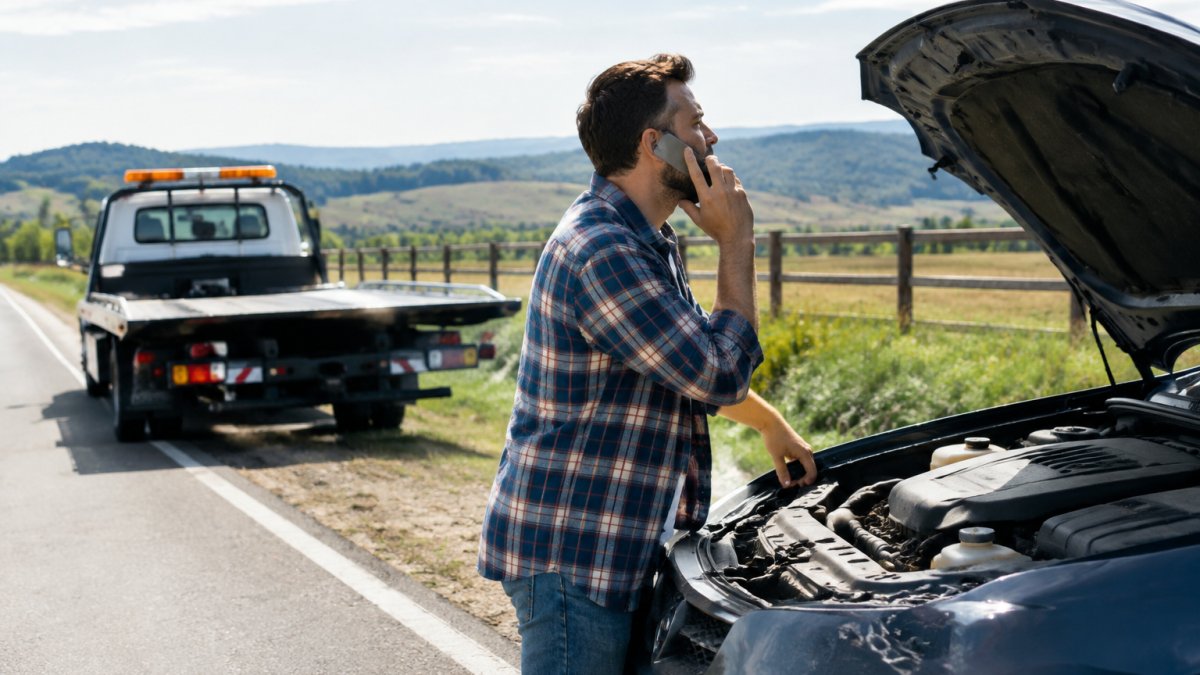

Last Updated: November 4, 2026
Quick Summary
Getting roadside assistance in rural areas starts with safety: pull fully off the road, turn on hazards, and set out reflective triangles before calling for help. Because cell service is often weak, try a text or app request first, and give dispatchers your GPS coordinates, road name, direction of travel, and nearest mile marker.
- Rural tow trucks commonly take 45 minutes to two hours, longer at night or in bad weather.
- Texts often queue and send when a bar appears, while voice calls fail outright.
- Dispatchers need your exact location, vehicle make and color, the problem, and whether anyone is in danger.
- Ask about towing mileage limits, service-call fees, and whether unpaved or private roads are covered.
- Keep a charged power bank, reflective vest, flashlight, water, blanket, and printed contacts in the trunk.
Table of Contents
- Why Rural Breakdowns Are Different From City Breakdowns
- How to Get Emergency Roadside Assistance in Rural Areas With Weak Cell Service
- What 24 Hour Roadside Assistance in Rural Areas Really Delivers
- How to Choose the Best Roadside Assistance in Rural Areas
- Frequently Asked Questions
Why Rural Breakdowns Are Different From City Breakdowns
A breakdown on a quiet country road is a different problem from a breakdown in town. According to Federal Highway Administration data on local and rural road safety, 83,856 people were killed in crashes in rural areas between 2020 and 2024. That is why roadside assistance in rural areas has to start with safety, not speed.
In a city, help is minutes away. Out here, shoulders are narrow, cell bars drop, and the nearest tow truck may be 40 minutes out. If you’re stranded in an unfamiliar place, learn how to handle a breakdown in an unknown area.
Three things change the whole plan:
- Less traffic, but faster traffic. Passing cars may not see you in time.
- No landmarks. “I’m on Route 9” tells a dispatcher almost nothing.
- Longer waits. Help is scarce.
Get out on the safe side, stay off the roadway, and call before you start guessing.
How to Get Emergency Roadside Assistance in Rural Areas With Weak Cell Service
Emergency roadside assistance in rural areas still works with one bar or none. The difference between a 30-minute dispatch and a two-hour one is usually preparation, not luck.
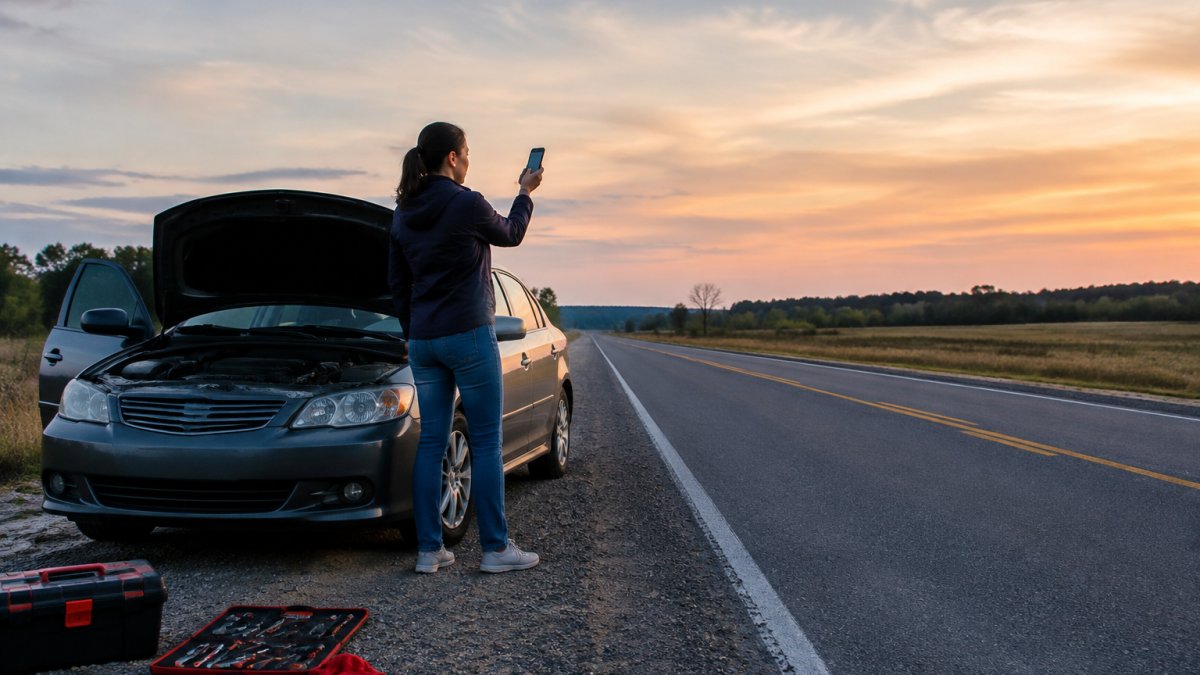
Before you travel, set up offline fallbacks. Download offline maps, save your provider’s dispatch number in your phone and on a glovebox card, and keep a charged power bank and 12-volt charger in the vehicle. Drop a pin at remote stops so you know your GPS coordinates ahead of time.
When the breakdown happens, work in this order:
- Get safe first. Pull fully off the road, turn on hazards, and set out reflective triangles or a vest. Do not stand in the roadway to check signal.
- Try a text before a call. Texts often queue and send the moment a bar appears, while voice calls fail outright. Send your provider your location and problem.
- Try an app request. Data requests can go through on weak signals when voice does not; see our guide to the best apps for roadside vehicle help.
- Place an emergency call if anyone is hurt or you are in a live traffic lane. Emergency calling works on any carrier’s tower. Give the dispatcher your road name, direction of travel, nearest mile marker, and GPS coordinates.
- Move for signal only if it is safer than staying. A short walk to higher ground can restore a bar. Do not walk down a blind curve, cross onto private land, or leave the vehicle in extreme cold or heat without water and a plan.
- Flag a passing driver as a last resort. Ask them to call once they have signal and relay your exact location.
What to say when you get through. Dispatchers need four things: your exact location, the vehicle make and color, what is wrong, and whether anyone is in danger. Read GPS coordinates if you have them; if not, describe the road name, direction of travel, last town passed, and any visible landmark such as a barn, bridge, or mile marker.
Watch out: never stand behind your car on a blind curve to wave someone down, and do not leave your vehicle running in an enclosed space or on dry grass.
What 24 Hour Roadside Assistance in Rural Areas Really Delivers
A 24 hour roadside assistance in rural areas plan covers the same core jobs day or night. What matters is what shows up and how long it takes.
Most providers handle these:
- Towing and vehicle recovery from ditches, mud, or soft shoulders
- Jump-starts for a dead battery
- Flat tire and tire change using your spare
- Lockout help when keys are inside
- Fuel delivery for an empty tank
- Minor roadside repairs for small mechanical problems
Set realistic response expectations. In a city, a truck may arrive in 20 to 30 minutes. On a remote two-lane road, a common pattern is 45 minutes to two hours, and longer in bad weather, at night, or on unpaved roads. When you call, ask: Is my exact road in your service area? What is the current ETA? Will you call or text if the driver is delayed? Write down the ETA and the dispatcher’s name, and call back if it passes with no contact.
Understand coverage limits and out-of-pocket costs before you need them. Plans can include a set number of service calls and a towing mileage allowance, so check the terms. Ask: How many miles of towing are covered? Is there a service-call fee? Does the plan cover unpaved or private roads? Is fuel free or billed at a markup? A quote given only after the driver arrives is a red flag; ask for the out-of-pocket estimate when you open the request.
Good Sam’s guidance notes that most services run 24/7 and cover rural and remote areas, but warns that arrival time can stretch in hard-to-reach locations. Our service overview shows what a request looks like from start to finish.
While you wait, stay with the vehicle if it is safe. Keep hazards on, stay behind the guardrail or well off the shoulder, and keep your phone charged. If you must leave, leave a note with your name, direction of travel, and the time you left.
How to Choose the Best Roadside Assistance in Rural Areas
The best roadside assistance in rural areas is the one that answers the phone at 2 a.m. and tells you a real arrival time. Compare on these points, not on the brochure.
| What to check | Why it matters | Red flag |
|---|---|---|
| Rural coverage map | Confirms your routes are covered | Vague “nationwide” claims |
| Dispatch model | Direct dispatch cuts wait time | Call centers that resell jobs |
| Upfront pricing | No surprise tow bills | Quotes given only after arrival |
| Location sharing | Helps find you fast | Phone address only |
| Live tracking | You know when help lands | No ETA at all |
Build a rural breakdown emergency kit too: a charged power bank, reflective vest, flashlight, water, blanket, and printed emergency contacts. Keep it in the trunk, not the glovebox.
Two more checks before you commit:
- Read the terms. Towing distance limits and out-of-pocket costs are worth confirming before you buy.
- Ask about backup. Find out what happens if the assigned driver cancels.
Our step-by-step guide on choosing roadside assistance for families walks through coverage for multiple drivers, and this piece on alternatives to membership clubs explains how app-based providers differ.
Frequently Asked Questions
How long can roadside assistance take in a rural area?
Expect longer waits than in a city. Rural dispatch often means a tow truck travels 30 to 60 miles or more, and hard-to-reach locations can push arrival times further out. Response times may be longer in places that are difficult to reach. When you request rural roadside assistance, ask the dispatcher for a realistic arrival window and a callback number, then plan to stay with your vehicle in a safe spot.
How do I get roadside assistance when there is no cell service?
Move to higher ground or an open clearing and try a text message, which sometimes sends on a weak signal when a call will not connect. If nothing works, note your mile marker or last cross street and walk toward the nearest home or business only if it is safe and visible. Before remote travel, save offline maps and share your route with someone who can call for help. A satellite messenger is the most reliable backup for rural breakdown emergencies far from coverage.
What should I keep in my car for a rural breakdown?
A rural breakdown emergency kit should cover visibility, warmth, and communication. Pack reflective triangles or road flares, a high-visibility vest, a flashlight with spare batteries, jumper cables or a portable jump starter, a tire pressure gauge and sealant, bottled water, a blanket, and a first-aid kit. Add a paper map, a power bank, and printed emergency contacts. Visibility gear matters as much as repair tools when you wait for assistance.
Rural breakdowns reward preparation, not luck. Save your exact location, keep a kit in the trunk, and pick a provider that dispatches certified local tow trucks directly. RITA Rescue gives you 24/7 help, live GPS tracking, and upfront price quotes before a truck rolls. Get started with RITA Rescue and get real help, even where the signal is thin.
