

Call us: 866-RITA-TOW

Last Updated: November 12, 2026
Quick Summary
The average roadside assistance response time in 2026 is a 47-minute industry median, according to Agero’s 2026 Roadside Report. Commercial vehicle service runs longer at 67 minutes, while digitally dispatched networks report under 28 minutes. Waits stretch to two to four hours in rural areas versus metro corridors.
- Over 52% of emergency towing and roadside requests occur between 5 PM and 8 AM on weekdays or anytime on weekends.
- Pull as far off the travel lane as possible, turn on hazard lights, and stay belted inside on a highway.
- The AAA Foundation identified 123 roadside assistance providers struck and killed by vehicles between 2015 and 2021.
- Track the arriving truck with live GPS and keep a reflective triangle and flashlight on hand.
- The vehicle roadside assistance market is valued at USD 32.8 billion in 2026.
How long will your tow truck actually take?RITA Rescue connects you to certified local tow trucks with live GPS tracking and upfront price quotes.
Table of Contents
- How Long Does Roadside Assistance Take in 2026?
- Why Is Roadside Assistance Taking So Long?
- What to Do While Waiting for Roadside Assistance
- Frequently Asked Questions
How Long Does Roadside Assistance Take in 2026?
The vehicle roadside assistance market is valued at USD 32.8 billion in 2026, according to Mordor Intelligence market analysis, and 47% of drivers experienced a roadside event in the past twelve months per Agero’s 2026 Roadside Report.
Roadside assistance response time is the interval between your service request and the arrival of a service vehicle at your location. It combines dispatch time, provider availability, and drive distance.
| Provider Type | Median Response Time | Notes |
|---|---|---|
| Overall industry median | 47 minutes | Agero, 2026 |
| Commercial vehicle service | 67 minutes | Market Data Forecast, 2026 |
| Digitally dispatched networks | Under 28 minutes | Market Research Future, 2026 |
Why Is Roadside Assistance Taking So Long?
Long waits usually trace to distance to the nearest provider, peak-hour call volume, traffic and weather, or thin rural coverage. Over 52% of emergency towing and roadside requests occur between 5 PM and 8 AM on weekdays or at any point during the weekend, per PitchIt’s after-hours towing analysis. Rural areas often see waits of two to four hours versus metro corridors; if you regularly drive remote routes, read our guide to roadside assistance in rural areas.
What to Do While Waiting for Roadside Assistance
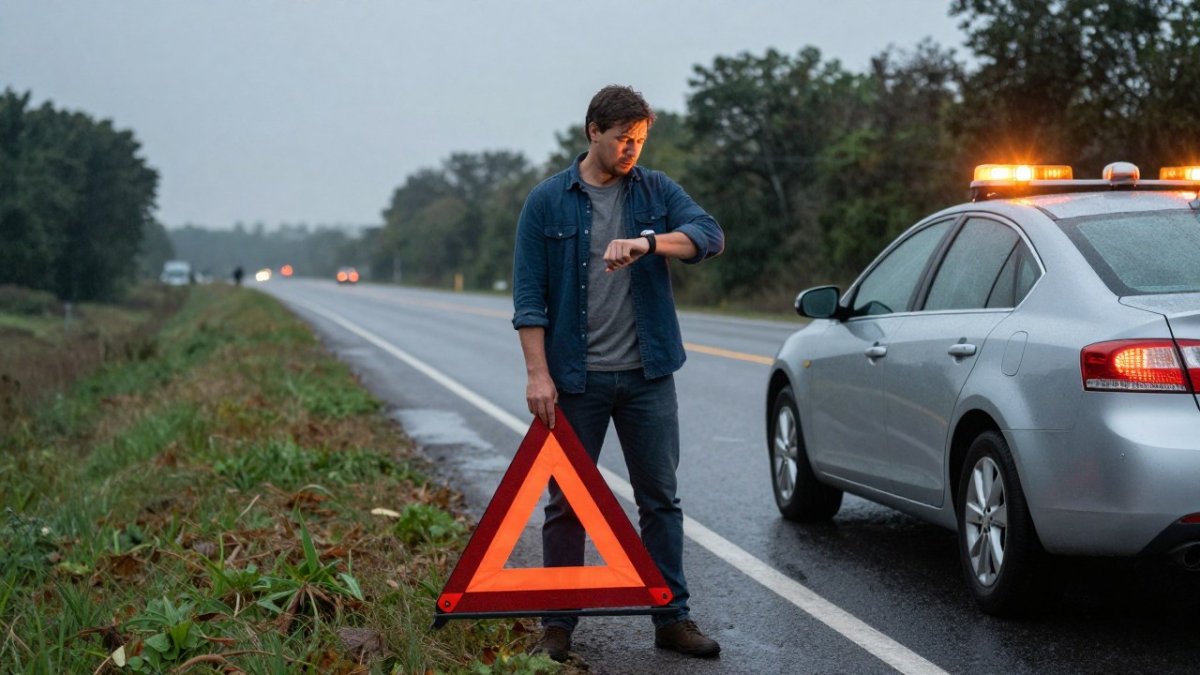
Get safe first: pull as far off the travel lane as possible, turn on hazard lights, and stay inside the vehicle with seatbelts on if you are on a highway. If you must exit, stand behind the guardrail, never in front of the car.
Roadside work is genuinely dangerous. The AAA Foundation for Traffic Safety identified 123 roadside assistance providers struck and killed by vehicles while working between 2015 and 2021. That is why a reflective triangle and a flashlight are not optional accessories.
While you wait, track the truck with live GPS, see our guides on how to track a tow truck location, steps for a nighttime breakdown, and the best apps for roadside vehicle help.

RITA Rescue connects you directly to certified local tow trucks and technicians with live turn-by-turn GPS tracking, so you can follow the arrival. Transparent digital receipts include upfront diagnostic price quotes.
You can review our coverage options to see what fits your driving patterns.
Breakdowns do not schedule themselves, and the difference between a 47-minute wait and a 28-minute one usually comes down to how the request is dispatched. RITA Rescue offers 24/7 roadside assistance, direct connection to certified local technicians, and live GPS tracking from the moment you request help. Get started with RITA Rescue and turn a stressful roadside wait into a tracked, transparent service call.
Frequently Asked Questions
What is the average wait time for roadside assistance?
Response times vary with distance, provider availability, traffic, and call volume, so arrival times are not guaranteed.
Why is my roadside assistance taking so long?
The usual culprits are provider availability, distance to your location, traffic, and weather. Demand can spike during evening and weekend hours, which can lengthen dispatch queues. If your ETA has passed, call the provider for a revised estimate and confirm whether a truck has been assigned. A service with live roadside assistance tracking shows you the driver’s position instead of leaving you guessing.
Can I track my roadside assistance driver?
Yes, if your provider offers it. App-based services show live GPS location and a turn-by-turn view of the truck’s route, which replaces repeated phone calls for updates. Tracking also helps you judge when to move to a safer spot or call again if the driver stalls. RITA Rescue offers live tracking, along with upfront diagnostic quotes and digital receipts.
