

Call us: 866-RITA-TOW

Last Updated: October 30, 2026
Quick Summary
To find certified mechanics you can trust, verify each technician’s individual credential rather than relying on a shop’s marketing. Ask for the technician’s name and certification ID, check the certifying organization’s directory, and confirm the credential is current and matches your repair.
- Certifications belong to individual technicians, so ask for the technician’s name, not just the shop.
- Ask for the credential or certification number, then look it up in the certifying organization’s directory.
- Confirm the certification is active and check its expiration date.
- Match the certification to the repair, since general credentials may not cover hybrid or calibration work.
- Compare written, itemized estimates line by line rather than comparing totals alone.
Table of Contents
- Why Certification Matters When You Need a Mechanic
- How to Verify Mechanic Certification
- How to Choose an Auto Repair Shop
- Questions to Ask a Mechanic Before You Authorize Work
- Reviewing a Mechanic Repair Estimate Before You Approve It
- Booking Your First Visit With a Vetted Technician
- Frequently Asked Questions
Why Certification Matters When You Need a Mechanic
When your car breaks down, you want someone skilled working on it. Certification is one of the clearest signals of that skill: certified mechanics have passed exams testing real knowledge of automotive systems, giving you a starting point for trust.
Certification isn’t the only thing that matters. As one experienced mechanic put it online: “Experience will trump any certification any day.” Certification shows a baseline of knowledge; hands-on work shows how it’s applied.
How to Verify Mechanic Certification
Don’t take a shop’s word for it. Verifying certification takes minutes and separates qualified technicians from the rest. Verify the individual technician’s credential, not just the shop’s marketing, and confirm it is current and relevant to your repair.
Ask which certifications their technicians hold and which technician will actually work on your vehicle. A good shop answers without hesitation and may display credentials in the waiting area. A vague answer is a warning sign.
Next, confirm the claim yourself:
- Ask for the technician’s name. Certifications belong to individuals, not shops.
- Ask for the certification number or credential ID. Legitimate certifying bodies issue a unique identifier that can be looked up.
- Check the certifying organization’s directory. Many let you search by name or credential number.
- Confirm current status. Credentials can lapse, so look for an active status and an expiration date.
- Match the certification to the work. A general credential may not cover specialized repairs such as hybrid high-voltage systems or driver-assistance calibration.
Pro Tip
Ask the shop to show you the technician’s credential record, not just a framed certificate. A current record includes the certification area, the date earned, and the expiration date.
Ask the shop to show you the technician’s credential record, not just a framed certificate. A current record includes the certification area, the date earned, and the expiration date.
Checking ASE Credentials and Current Status
The most widely recognized U.S. credential is from ASE, the National Institute for Automotive Service Excellence.
When you check ASE credentials, confirm four things:
- The technician’s name matches the credential
- The certification is active and not expired
- The certification covers the type of repair you need
Ask the shop if the technician’s credentials are current, then verify them with the certifying organization rather than a printed card alone. If a shop won’t provide the technician’s name and credential information, that is a meaningful signal.
Understanding Certification Types and What They Cover
Not all certifications are the same. A general automotive certification shows broad knowledge, a specialty certification shows deeper skill in one area, and manufacturer-specific training covers one brand’s systems, each qualifies a mechanic for a different kind of job.
Here’s a simple way to think about it:
- General certification: Covers common repairs and maintenance. Useful for routine service and straightforward diagnostics.
- Specialty certification: Covers focused areas like brakes, engines, electrical systems, or suspension. Matters when your repair is concentrated in one system.
- Manufacturer training: Covers one brand’s systems, tools, and procedures. Matters for newer vehicles, warranty-adjacent work, and brand-specific diagnostics.
For a complex electrical fault on a newer car, a general credential may not be enough. Look for a technician with the matching specialty and, when possible, experience with your vehicle’s brand.
Watch Out
A displayed ASE logo does not tell you which technician holds which certification or whether it is current. Always verify the individual credential and its status before authorizing specialized work.
A displayed ASE logo does not tell you which technician holds which certification or whether it is current. Always verify the individual credential and its status before authorizing specialized work.
Verifying Manufacturer and Advanced-Systems Credentials
Manufacturer training is often delivered through a brand’s own technician program, and the shop may be able to show a training record or program certificate. Ask which program, which level, and when training was completed.
A practical rule: the more specialized the repair, the more specific the credential you should confirm.
Certifications differ in scope, so match the credential to the repair you need.
| Certification type | Covers | Matters when |
|---|---|---|
| General certification | Common repairs and maintenance | Routine service and straightforward diagnostics |
| Specialty certification | Brakes, engines, electrical, suspension | Your repair is concentrated in one system |
| Manufacturer training | One brand’s systems, tools, procedures | Newer vehicles and brand-specific diagnostics |
| Advanced-systems training | Hybrid/EV high voltage, driver-assistance sensors, software | Repair involves high voltage, calibration, or module programming |
How to Choose an Auto Repair Shop
Picking a shop comes down to a few practical checks.

Read online reviews and ratings, looking for patterns rather than single comments.
Ask friends, family, and coworkers for recommendations. Personal referrals often reveal things reviews can’t, like how a shop handles problems after the repair.
Evaluate the shop’s experience and specialties. Ask how long it has been open and whether it works on your make.
A Practical Shop-Vetting Checklist
Use this checklist for every shop on your short list. The goal is to compare shops on the same criteria rather than on first impressions.
- Technicians hold current, relevant certifications, and the shop will name the technician and credential
- Reviews show consistent, specific praise and no repeated pattern of complaints
- The shop works on your vehicle type and has experience with your make
Comparing Estimates and Avoiding Unnecessary Repairs
A written estimate protects you from surprise charges, but only if you read it carefully and compare it against others.
With two or three estimates, compare line by line rather than by total. A lower total may exclude a needed part, use a lower-grade part, or omit labor another shop included. Ask each shop to explain any line item you don’t understand and whether the estimate covers the full job or only the diagnosis.
Watch for unnecessary repairs. If a shop recommends several urgent fixes, ask which affect safety right now and which can wait, a common approach sorts work into safety-critical now, needed soon, and optional or preventive, explaining the consequence of waiting.
Key Takeaway
The lowest quote isn’t automatically the best choice. Compare the warranty, the parts grade, the shop’s experience with your vehicle, and whether the estimate covers the full job. A slightly higher quote with a written warranty and a clear authorization process is often the better value.
The lowest quote isn’t automatically the best choice. Compare the warranty, the parts grade, the shop’s experience with your vehicle, and whether the estimate covers the full job. A slightly higher quote with a written warranty and a clear authorization process is often the better value.
Labor rates and repair costs vary widely by region and vehicle. For current prices, ask local shops for written quotes and compare them line by line.
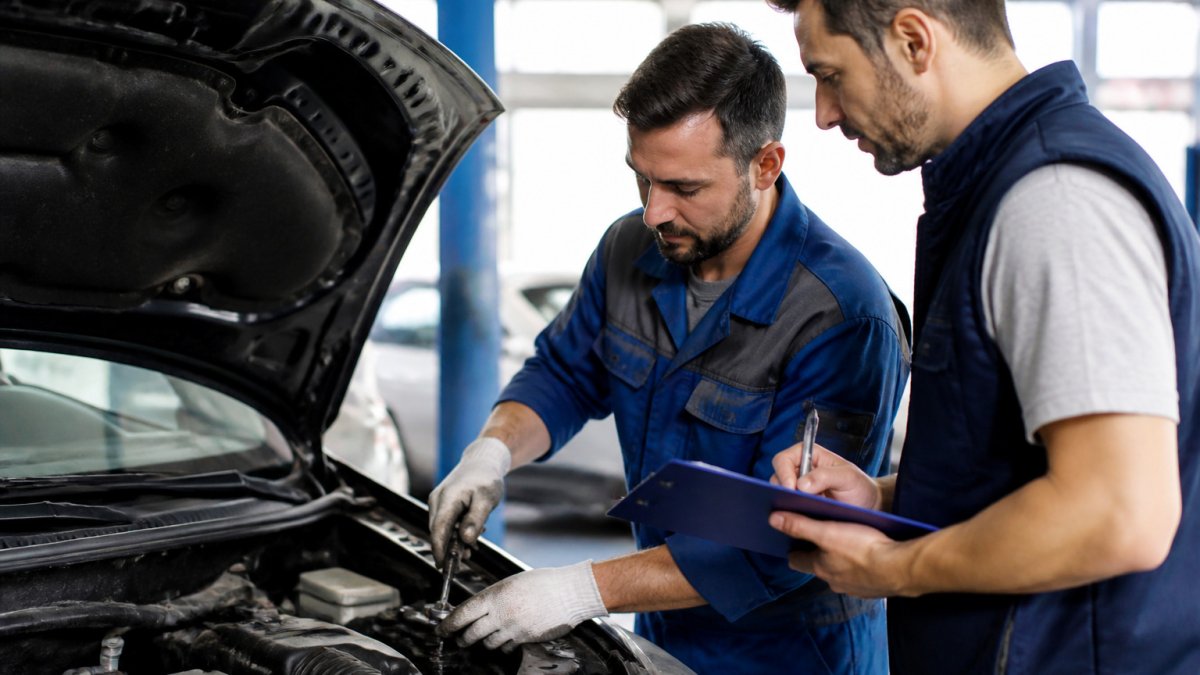
!A certified technician in a clean repair bay reviewing a written estimate with a vehicle owner beside a lifted car
Questions to Ask a Mechanic Before You Authorize Work
Before you hand over your keys, ask a few direct questions. The answers tell you how the shop operates and whether you’ll feel comfortable.
Start with these:
- What certifications do the technicians hold, and are they current?
- Have you worked on my make and model before?
- Will you give me a written estimate before any work?
Pay attention to how the shop answers. Clear, patient answers are a good sign. Pressure to decide quickly, or vague responses, are reasons to pause.
Reviewing a Mechanic Repair Estimate Before You Approve It
A written estimate protects you from surprise charges. Read it carefully before saying yes.
Check that the estimate lists each part and labor charge separately. Confirm the total matches what the shop quoted over the phone. Ask the mechanic to explain any item you don’t understand.
Compare estimates when you can, two or three quotes show what a fair price looks like in your area. The lowest quote isn’t always the best choice, though. Consider the warranty, the shop’s experience, and whether the quote covers the full job.
Booking Your First Visit With a Vetted Technician
Once you’ve picked a shop, booking your first visit is simple. Call ahead, describe the problem clearly, and ask for an estimate timeline.
If you need help now, RITA Rescue connects drivers with certified local tow trucks and mechanics through its mobile app, with live GPS tracking of the service. Check local service availability in Brampton, CA to see what help is offered in your area.
For urgent situations, you can learn safe, practical steps to take when your car breaks down at night before help arrives.
After the visit, keep your receipt and the written estimate. They’re your record if a warranty question comes up later.
Frequently Asked Questions
How do I find a certified mechanic near me?
Start with the ASE shop locator or a search for ASE-certified repair shops in your area, then narrow the list using online reviews and direct calls. Ask whether the technicians hold current ASE credentials for the work you need, such as brakes or engine diagnostics. Compare two or three shops on responsiveness, written estimates and warranty terms before choosing one. Many shops will also tell you which technicians hold specific certifications if you ask directly.
How can I verify that a mechanic is ASE certified?
Certifications are issued to individuals, so ask for the technician’s name and check it against the certifying organization’s records. Confirm the credential is current and matches the service you need, since certifications are specialty-based. A shop that hesitates to name its certified staff is worth questioning. Keep a note of the certification names you verify for future visits.
Does ASE certification mean a mechanic is trustworthy?
Certification shows a technician has passed standardized tests. It does not guarantee honest pricing or quality on every job, so it works best alongside reviews, a clear written estimate and a repair warranty. Experience with your make and model also matters. Treat certification as a strong first filter rather than the final answer.
What questions should I ask a mechanic before authorizing repairs?
Ask what is actually wrong, how the shop confirmed the diagnosis and whether the repair is urgent or can wait. Request a written estimate that separates parts and labor charges. Ask what warranty covers the parts and labor and how long it lasts. Confirm whether you will be contacted before any additional work is performed beyond the approved estimate.
Finding a certified mechanic you can trust takes a little effort, but it pays off in safer repairs and fewer surprises. Check credentials, read reviews, ask direct questions, and review every estimate. When you need help fast, RITA Rescue is here to connect you with vetted professionals around the clock.
