

Call us: 866-RITA-TOW

Last Updated: October 24, 2026
Quick Summary
A jump start service sends a technician with a portable power source to restart a dead battery on the spot, usually taking 10 to 20 minutes on site. You get an upfront diagnostic quote in the app before you confirm, and the jump itself is typically under a minute.
- Call when the engine cranks slowly, clicks once and goes silent, or dashboard lights dim.
- The safe sequence is positive to positive, negative to a bare metal ground, never negative to negative.
- Never jump-start a battery that is cracked, leaking, or visibly swollen.
- After a jump, drive at least 20 to 30 minutes at highway speed so the alternator recharges.
- A failed jump usually means the battery can’t hold a charge or the terminals are too corroded.
Table of Contents
- When to Call a Car Battery Jump Start Service
- How to Jump-Start a Car Safely Before Help Arrives
- Car Battery Jump Start Cost and How Long It Takes
- Frequently Asked Questions
When to Call a Car Battery Jump Start Service
A car battery jump start service sends a technician with a portable power source to restart a dead battery on the spot. Call when the engine cranks slowly, clicks once and goes silent, or the dashboard lights dim as you turn the key. Consumer Reports, citing AAA, reports that AAA handled more than 5.7 million battery-related roadside service calls in 2024 (Consumer Reports on jump-starting a dead battery(https://www.consumerreports.org/cars/car-batteries/jump-start-car-with-dead-battery-a1028630350/)).
A professional jump start beats DIY when the battery is over three years old, you’re on a highway shoulder, you drive an EV or hybrid with a separate 12-volt battery, or the terminals show white or green crust. Confirm a jump start is covered on the roadside service menu and check whether your location is covered before requesting dispatch through the app.
How to Jump-Start a Car Safely Before Help Arrives
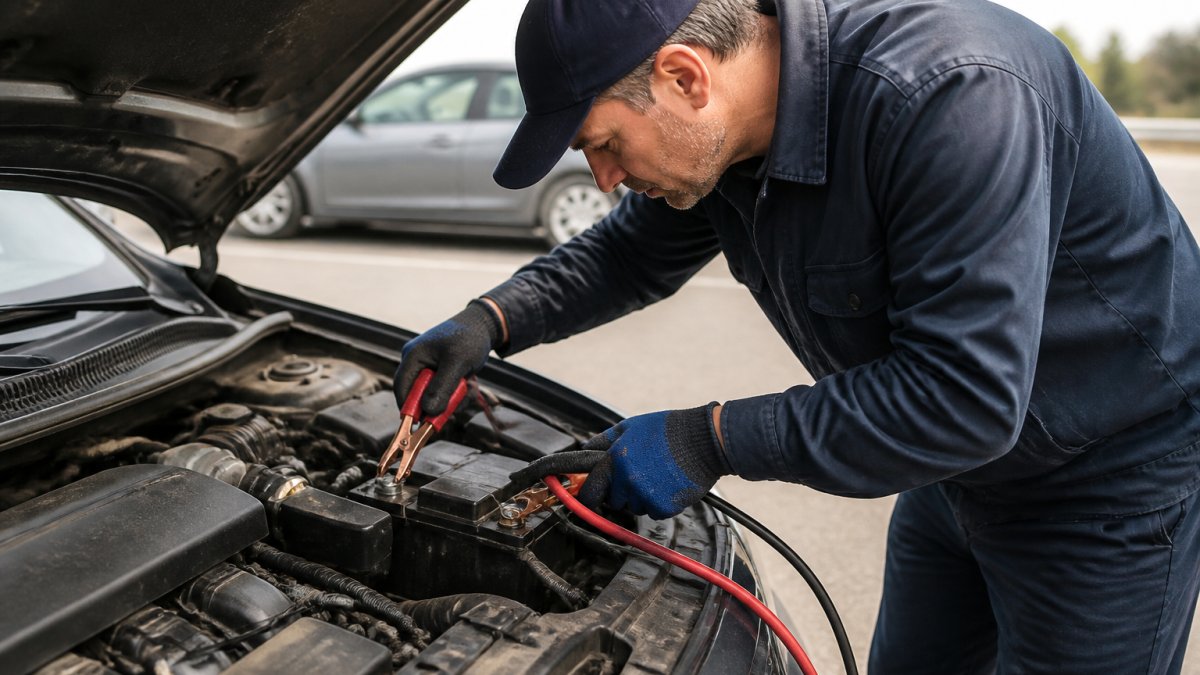
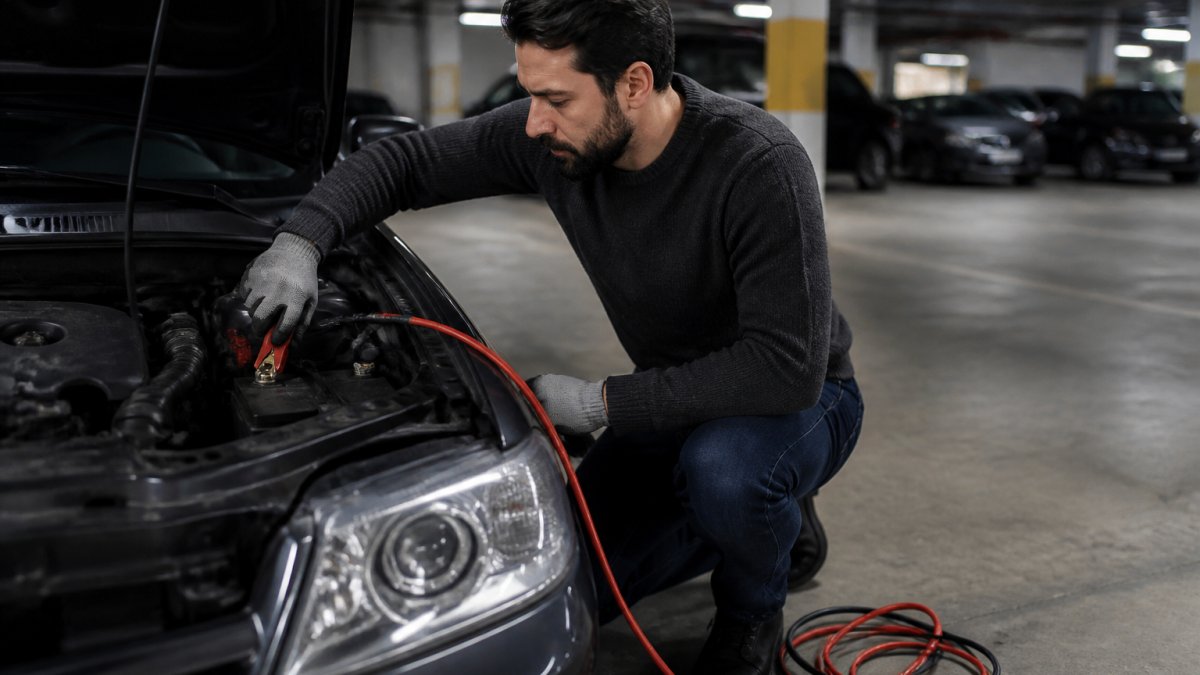
The safe sequence is fixed: positive to positive, negative to a bare metal ground on the dead vehicle, never negative to negative. Reversed clamps can fry modern cars’ electrical systems, costing hundreds or thousands of dollars. Never jump-start a battery that is cracked, leaking, or visibly swollen, that is a tow, not a jump. For highway breakdowns, see handling a highway breakdown safely and what a towing service covers.
Car Battery Jump Start Cost and How Long It Takes
Most jump starts take 10 to 20 minutes on site, including terminal cleaning and a battery check; the jump itself is usually under a minute. You get an upfront diagnostic quote in the app before you confirm.
|
Factor |
What It Changes |
Typical Impact |
|---|---|---|
|
Time of day |
Overnight and holiday calls |
Higher dispatch fee |
|
Battery condition |
Fails a load test |
Replacement instead of jump |
|
Membership |
Bundled coverage |
Lower or no per-call cost |
A jump start restarts a battery that ran down; it doesn’t fix one that can’t hold a charge. When ready, schedule a jump start and see the quote before dispatch.
Frequently Asked Questions
How much does a car battery jump start service cost?
Pricing for a jump start service depends on your provider, location, and time of day, so there is no single national figure. Many membership plans bundle jump starts into a monthly or annual fee. RITA Rescue shows an upfront quote in the app before you confirm, so you know the price before a technician is dispatched. Check the app or website for current rates in your area.
How long does a car battery jump start take?
The jump itself usually takes a few minutes once a technician or donor vehicle is connected. The bigger variable is response time, which depends on traffic and how close the nearest truck is. After the engine starts, let it run for at least 15 to 20 minutes so the alternator can recharge the battery. If the car dies again soon after, the battery or charging system likely needs a test.
What should you do if your car won’t start after a jump?
If the engine still won’t turn over after a proper jump, stop trying and look at the cause. A battery that is completely dead, corroded terminals, a faulty starter, or a failing alternator can all prevent a start. AAA logged more than 5.7 million battery-related roadside calls in 2024, according to Consumer Reports, so battery failure is common. Call a professional service for a battery and alternator check rather than repeated jump attempts.
A dead battery is a solved problem, not a crisis, provided you get power to the vehicle before you do something risky on a shoulder. RITA Rescue connects you to certified local technicians 24/7, with live GPS tracking so you know exactly when help arrives and transparent digital receipts with upfront diagnostic quotes so the price never changes at the curb. Get started with RITA Rescue and turn a no-start morning into a twenty-minute delay.
